BRAKE CALIPERS
Brake caliper painting
Rusty calipers are cleaned back to metal and given fresh colour, so the gap between the spokes shows a tidy detail.
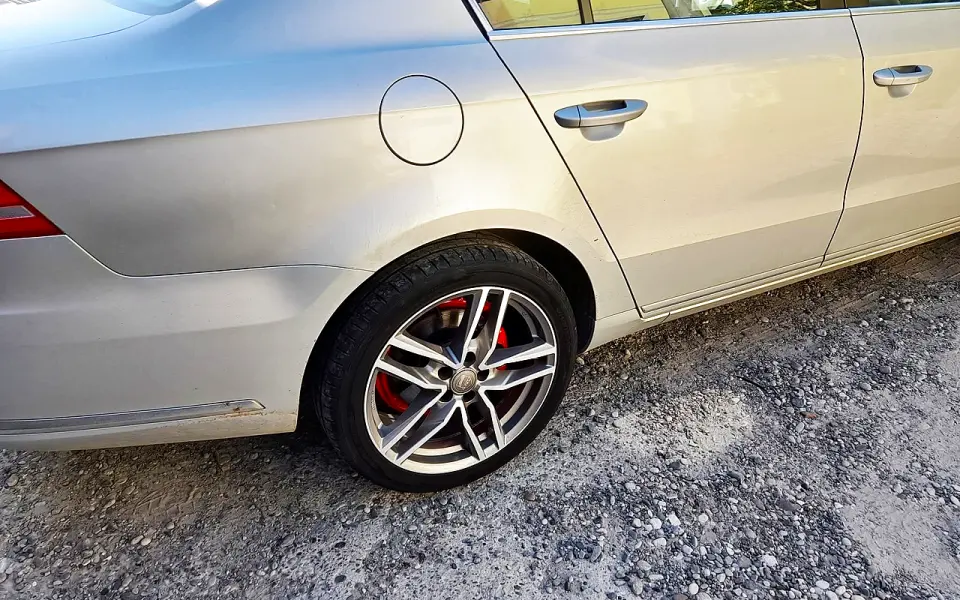
The one part behind the wheel you always see
Once the wheels are clean and painted, a rusty caliper behind them stands out even more. On wheels with open spokes that part is visible on every corner and from every angle, so the two jobs are usually done together while the wheel is off anyway.
The work begins with cleaning. Rust, old paint and brake dust are taken off until a surface is reached that colour can lie on. Without that step a new coat would be holding on to the rust underneath it and would soon give way to heat and damp.
After preparation comes paint intended for parts that get hot in use. Working faces and everything that must stay clear are masked off first, because the coat must not reach them. The tone is agreed in advance, most often to match the wheels or the car.
Handled in the same visit
- Wheels painted in an agreed tone
- Tyres taken off and refitted
- Wheels balanced after fitting
- Calipers cleaned back to sound metal
- Masking of parts that stay unpainted
Why calipers get painted
The reasons are practical as much as visual, and the job is quickest while the wheel is off the car anyway.
Getting the rust off
Surface corrosion is taken back to metal. That stops a process which would otherwise keep growing underneath every new coat of paint.
Heat resistance
Paint made for parts that warm up in use is applied, so the coat does not shift in tone or peel away after heavy braking.
A detail seen through the spokes
On an open wheel design the caliper is permanently in view. Clean colour behind the rim gives a tidy picture instead of patches of corrosion.
Protection from salt and damp
A new coat closes the metal and makes it harder for damp and road salt to start corrosion again on the most exposed part behind the wheel.
How a caliper is done
Four steps carried out while the wheel is off, most often in the same visit as the work on the wheels themselves.
Wheel off and cleaning
The wheel comes off and the caliper is cleaned of dust, grease and rust. The work continues until a firm, dry surface has been reached.
Masking the surroundings
Everything that must not take colour is covered: lines, rubber parts and mating faces. Without that, paint ends up where it does not belong.
Applying the colour
Paint goes on in thin layers with a pause between them. Thin coats dry better and stay harder than one heavy application ever would.
Drying and refitting
Once dry, the masking comes off and the wheel goes back on. Full hardness only arrives after a few heat cycles out on the road.
What is painted and what is not
The visible body of the caliper is painted. Sliding surfaces, the places the pads bear against, the lines and the rubber parts are left untouched, because a coat of paint would interfere with how they work. That is why preparation and masking take longer than the spraying itself.
If the cleaning reveals that a caliper is damaged or leaking somewhere, the work stops and you are told. Paint does not solve a fault like that, it only hides it, and brakes are one part where that is never done under any circumstances at all.
Questions about caliper painting
How well does caliper paint stand up to heat?
Paint intended for parts that get hot is used, so the coat stays stable in normal use. What destroys it fastest is not heat but poor preparation: if rust or grease is left underneath, the layer gives way whatever the quality of the paint above it.
Can calipers be painted without taking them off the car?
Yes, the work is done with the wheel removed while the caliper stays in place. Everything that must not take colour is masked carefully beforehand. That avoids stripping the brake system down unnecessarily and leaves everything as it was.
Which colours can I choose for the calipers?
The tone is agreed before the start. Most people pick a contrast to the wheels, but a discreet dark shade that hardly draws the eye is done just as well. The decision is easiest to make once you know how the wheels will look after painting.
Do you paint calipers when the wheels need no work?
We do. The wheel comes off, the caliper is cleaned and coated, and the wheel goes back on. If something is being done to the wheels in the same appointment, the jobs are combined so the car does not have to come twice for the same corner.
What if a caliper is heavily rusted?
Surface rust comes off and a caliper like that is painted as normal. If corrosion has eaten into the material, or if something is visibly leaking, you are warned, because nothing is painted over a condition like that. Brakes are put right first and made to look good afterwards.
When can the car be driven after the calipers are painted?
The wheel goes back on only once the coat is dry to the touch and stable. Full hardness comes through a few heat cycles out on the road, so in the first days it makes sense to avoid hard braking where it is not needed.
What goes best with caliper work
While the wheel is off it is worth sorting the rim as well: a cut on the lathe, fresh colour, or simply balancing.
Welding and crack repair
Cracks, breaks, holes in the bead seat and missing chunks of metal. The area is welded through its full thickness and machined back to the wheel's original line.
More on thisStraightening buckled wheels
A wheel that hops, shakes the steering or has gone oval after a pothole is pressed back into a true circle in small stages, with the metal checked as it goes.
More on thisCNC refinishing and lip polishing
Taking a thin layer off on the lathe restores an even circle and a flat bead seat, while polishing gives the outer lip the shine of bare metal.
More on thisPreparation and wheel painting
Old lacquer and corrosion come off down to sound metal, then primer and topcoat go on in a colour agreed before any work starts.
More on thisTyre fitting and balancing
Tyres off and back on, new rubber fitted, seasonal changeovers and wheel balancing so the steering stays calm out on the open road.
More on thisRusty calipers spoil the look
Send a picture of the wheel and say which tone you would like, and a time is arranged while the rims are here.