PREPARATION AND PAINT
Wheel painting
The old lacquer and the corrosion come off, then the wheel is built back up: primer, colour and topcoat on clean metal.
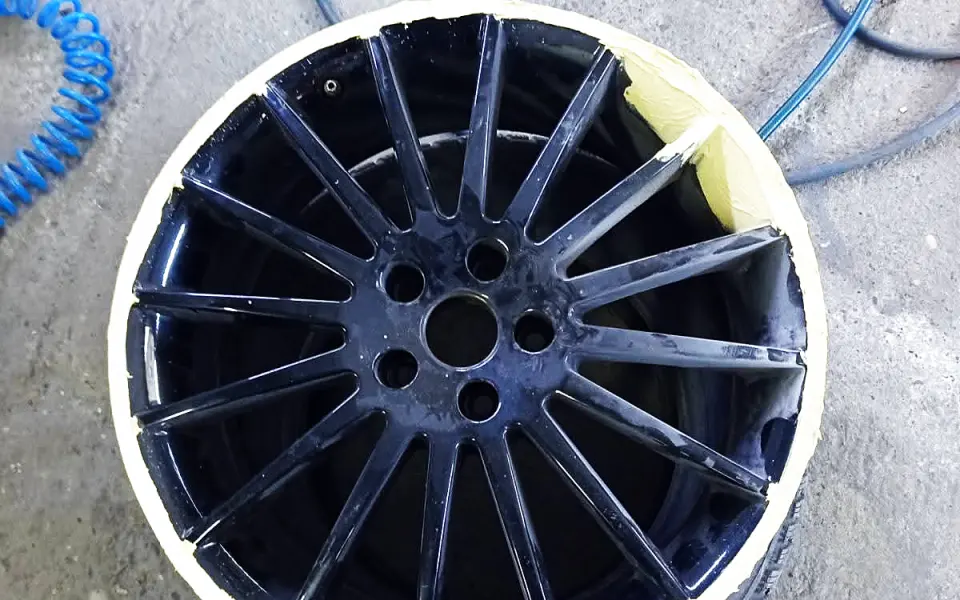
Paint holds as well as what is under it
Most of the work in painting a wheel goes into the preparation, not into the colour. The old lacquer is stripped, corrosion removed and the places left behind by an impact or a weld are levelled. Only when the metal is clean and dry does it make sense to put anything over it.
Then comes the primer that ties the colour to the aluminium or the steel, followed by the topcoat in a tone agreed beforehand. The whole wheel is done rather than just the damaged spot, because the join between old and new lacquer always shows in the end, especially in daylight.
Painting usually follows on from other work. A wheel that has been straightened and welded is bare metal where it was machined anyway, so a fresh coat is the logical end of the job and at the same time protection for the metal against damp and road salt.
Usually done alongside painting
- Tyre off and back on with balancing
- Machining the front face on the lathe
- Welding a crack before preparation
- A polished lip against a coated wheel body
- Brake calipers coated in a matching tone
What painting gives you
Four reasons wheels end up in paint preparation, from appearance right through to protecting bare metal.
Stripping the old lacquer
Flaking or faded lacquer is removed from the whole surface. A new coat does not go over an old one, because it would soon lift together with it.
Removing corrosion
White deposits on aluminium and rust on steel are taken back to sound metal. Left under the paint they carry on working and push the new coat off from below.
An even look across the set
When all four wheels are coated in the same run, the tone is identical on every one. That is why a full set is often done together even if only one was damaged.
Protection after a repair
A machined or welded area is left with no protection at all. Primer and topcoat close the metal and stop corrosion starting again at exactly that spot.
The path from old surface to new
Four steps carried out in the same order on every wheel, because each one needs a clean base underneath it.
Tyre and weights off
The tyre and the old balance weights come off, because a wheel is only painted when it is completely bare. The valve is checked as the tyre goes back on.
Surface preparation
Old lacquer, corrosion and grease are removed and uneven spots levelled. The surface has to be clean and dry before anything at all goes over it.
Primer coat
Primer is laid evenly across the whole wheel and gives the colour something to bond to. Without it the topcoat has nothing to hold on to.
Topcoat and drying
Colour is applied in passes with a pause between them. The wheel is left untouched until the coat has set, and only then does the tyre go on and the assembly get balanced.
Colour, tone and combinations
The tone is chosen before the work starts. Most people ask to return to a shade close to the original, but a move to something darker or lighter is done just as often, as is a painted wheel body with a polished lip. The colour sample is looked at together before anything begins.
If only one wheel out of a set is painted, remember that the other three have years of sun and washing behind them. The new colour will look fresher, and the tidiest answer is to coat all four. Where the difference is acceptable, a single wheel is done on its own.
Questions about wheel painting
Does the tyre come off before the wheel is painted?
Yes, a wheel is only painted bare. The tyre, the weights and everything else come off, because the colour has to reach the edge and the bead seat. Once the coat has dried the tyre goes back on, the assembly is balanced and only then is it ready to bolt onto the car.
Can only the damaged part of the wheel be painted?
Technically it can, but the join between old and new lacquer shows in the end, especially in lighter tones. That is why the whole wheel is done. It also deals with the places where the old coat has started to let go and is not yet noticeable.
How long does fresh paint last on a wheel?
That depends above all on the preparation underneath and on how the wheels are washed in winter. If the metal was taken back to sound material and the primer laid on properly, the coat holds for a long time. Aggressive cleaners and road salt are what wear it fastest.
Can I have a different colour from the original?
You can. The tone is chosen before work starts and does not have to match the factory finish. A common combination is a wheel body in one colour with the lip polished to bare metal. The colour is settled between us before preparation begins.
Do you paint steel wheels as well?
Yes. On steel rims the preparation matters even more, because rust has to come off down to sound metal or it carries on working under the new coat. After cleaning comes primer and then the topcoat, in the same order as on aluminium.
What if the wheel has been painted before?
The previous coats are stripped, because there is no way of knowing how they were applied or how many there are. Fresh lacquer over a thick old build-up soon gives way. Once the metal is reached, the wheel starts from the same point as any other going into preparation.
What comes before painting
Colour is the last step, with straightening, welding and machining in front of it, because each one leaves bare metal behind.
Welding and crack repair
Cracks, breaks, holes in the bead seat and missing chunks of metal. The area is welded through its full thickness and machined back to the wheel's original line.
More on thisStraightening buckled wheels
A wheel that hops, shakes the steering or has gone oval after a pothole is pressed back into a true circle in small stages, with the metal checked as it goes.
More on thisCNC refinishing and lip polishing
Taking a thin layer off on the lathe restores an even circle and a flat bead seat, while polishing gives the outer lip the shine of bare metal.
More on thisTyre fitting and balancing
Tyres off and back on, new rubber fitted, seasonal changeovers and wheel balancing so the steering stays calm out on the open road.
More on thisBrake caliper painting
Rusty calipers are cleaned back to metal and coated in heat-resistant paint, so the gap between the spokes shows a tidy detail instead of corrosion.
More on thisWheels looking tired?
Photograph them in daylight and send them over. We agree the tone and a day when the wheels can stay here.